Polynesia is home to a dynamic island culture. Perhaps best known for a culture incorporating tiki gods, Polynesia is also known for great food! If you're thinking of hosting a luau or a tropical party, one of the most important steps of your party planning process is to seek out Polynesian recipes. While many of these mirror similar dishes found in Hawaiian cuisine, others are unique to the native Polynesians, or blend a wide array of culinary traditions, including those found in Hawaii, Asia, and even the mainland U.S.
When most people think of Polynesian food, they think of dishes featuring chicken, poi, and/or pineapple. These are certainly a few staple ingredients found at most Polynesian meals. Traditionally the Polynesian diet also features taro root and sweet potatoes, as well as rice and beans. Hawaiian baked beans, one staple dish, often comprise a large part of both Hawaiian and Polynesian fare.
For sweet recipes, the Polynesian diet often incorporates banana and coconut, like many other tropical islands. Both of these crops are traditionally grown on the Polynesian islands, and using them as ingredients for your luau menu will certainly provide an added flavor of authenticity.
Of all of these traditional Polynesian ingredients, taro root and poi are the two that are typically unfamiliar to American audiences. Taro root is the root of a tuber plant, related to yams and potatoes. Considered a staple in many cultures of Africa, Oceania, and Asia, it has a texture similar to that of a sweet potato, with a flavor like that of a potato. In the U.S., it can be found at most supermarkets carrying a large selection of Asian foods. Poi is made from the taro plant, which is cooked and then mashed into a pudding-like consistency.
Although these two ingredients are not typically found in dishes created in the mainland U.S., most of the other ingredients needed for Polynesian recipes can easily be found in any grocery store. Who says that you must be in Hawaii to experience a luau, or Polynesia to experience a delicious Polynesian feast? You can cook easy Polynesian-inspired dishes in your own home, using ingredients you're already familiar with.
For the most part, Polynesian food is traditionally cooked in an earthen oven. For your own Polynesian party, this means plenty of baked dishes, though of course you can use your regular oven as an alternative to the traditional earthen oven.
Often, the key to creating the perfect menu for a luau or tiki-themed party lies in authentic Polynesian fare that's familiar enough to please mainland palates. This was certainly true in the tiki lounges that sprang up in the 1930s, tiki bars during the tiki craze of the 50's and 60's, and in today's restaurants around the world that feature Polynesian-inspired menus.
For the main course, look towards sweet and sour sauce for something that's a bit familiar to most mainland taste buds, yet also quite exotic and tropical. Most people are familiar with this sauce from Chinese restaurants. Recipes for Polynesian sweet and sour sauce typically require sugar and white vinegar, and are used to coat pork, chicken, or shrimp. As an alternative to sweet and sour, use soy sauce to coat the meat. Fried rice is another great dish that is certainly Polynesian, yet also familiar to those on the mainland.

Showing posts with label luau. Show all posts
Showing posts with label luau. Show all posts
April 21, 2011

February 25, 2011
More Tips From The Hawaiian Guru
For those who like to be on the go, love beautiful places, and enjoy the surf, Hawaii is the place for you. If you do your homework and shop online, you will find that Hawaii is a vacation spot that will remain in your memories for a long time.
Here are some tips that will make your vacation manageable and affordable.
#1 Save Money by Vacationing Off-Season
Travel during the off-season (spring and winter excluding holidays), you will find that you can save substantially on your vacation. In fact, the difference between a flight to Maui May 31 and June 4 is $300.
#2 Leave on a Tuesday
If you leave in the middle of the week and return in the middle of the week, you will save money and get extended days of vacation practically free. Instead of leaving on Monday, leave on Tuesday. This simple change meant you could stay until the next Monday for $50 more than leaving Monday to Friday. That means you might get three extra days including hotel for $50.
#3 Book Activities in Advance
By building an itinerary, you will be able to manage your trip and keep those idle times to a minimum. You went there to do everything. You don't want to get there and have nothing to do. Or worse, get there, want to do something, and then discover it is sold out.
Additionally, when you book in advance, you can receive special package discounts. For example, many Luaus cost more if you purchase same day. Buy purchasing your tickets in advance, you avoid the same day ticket price.
#4 Carry Around Water and Snacks
You can have more fun if you stay hydrated and have some snacks. Your pack can provide you with the opportunity to do both without having to stop and buy something to drink or get some food.
Food and beverages are the most profitable items for the tourist businesses. Since Hawaii focuses mainly on tourism, food can be the most expensive for you. You will find that when you get thirsty the only thing available is expensive "tourist" drinks. Carrying your own will allow you to spend on things you want.
#5 Plan Your Meals
Mix up meals by choosing some fast food restaurants and making some picnic lunches with snack foods. Planning your meals will save you considerable cash. Food will be a major expense if you don't plan ahead.
Managing your meals is like managing your money. The more you save on meals, the more you can spend on fun. If you are a foodie, then plan when and where you will go out to eat. Otherwise, you might miss out on the one place you really want to go.
#6 Don't Overspend on Souvenirs
Lastly, decide how much money you are willing to spend on souvenirs. Don't buy souvenirs on a credit card, pay cash. If you decide to spend $200 on souvenirs, have that much money in cash. Credit cards are just too tempting to use for souvenirs and they don't get the best discounts. Many souvenir shops in Hawaii are self owned. Therefore, if you pay cash, you can get a better deal.
Control your spending by limiting your purchases to cash. As your cash goes down, you will stay on budget.
With these tips, you will find you will have more fun and spend less money. Not going bankrupt on a vacation is an enjoyable event also. Have fun!
Here are some tips that will make your vacation manageable and affordable.
#1 Save Money by Vacationing Off-Season
Travel during the off-season (spring and winter excluding holidays), you will find that you can save substantially on your vacation. In fact, the difference between a flight to Maui May 31 and June 4 is $300.
#2 Leave on a Tuesday
If you leave in the middle of the week and return in the middle of the week, you will save money and get extended days of vacation practically free. Instead of leaving on Monday, leave on Tuesday. This simple change meant you could stay until the next Monday for $50 more than leaving Monday to Friday. That means you might get three extra days including hotel for $50.
#3 Book Activities in Advance
By building an itinerary, you will be able to manage your trip and keep those idle times to a minimum. You went there to do everything. You don't want to get there and have nothing to do. Or worse, get there, want to do something, and then discover it is sold out.
Additionally, when you book in advance, you can receive special package discounts. For example, many Luaus cost more if you purchase same day. Buy purchasing your tickets in advance, you avoid the same day ticket price.
#4 Carry Around Water and Snacks
You can have more fun if you stay hydrated and have some snacks. Your pack can provide you with the opportunity to do both without having to stop and buy something to drink or get some food.
Food and beverages are the most profitable items for the tourist businesses. Since Hawaii focuses mainly on tourism, food can be the most expensive for you. You will find that when you get thirsty the only thing available is expensive "tourist" drinks. Carrying your own will allow you to spend on things you want.
#5 Plan Your Meals
Mix up meals by choosing some fast food restaurants and making some picnic lunches with snack foods. Planning your meals will save you considerable cash. Food will be a major expense if you don't plan ahead.
Managing your meals is like managing your money. The more you save on meals, the more you can spend on fun. If you are a foodie, then plan when and where you will go out to eat. Otherwise, you might miss out on the one place you really want to go.
#6 Don't Overspend on Souvenirs
Lastly, decide how much money you are willing to spend on souvenirs. Don't buy souvenirs on a credit card, pay cash. If you decide to spend $200 on souvenirs, have that much money in cash. Credit cards are just too tempting to use for souvenirs and they don't get the best discounts. Many souvenir shops in Hawaii are self owned. Therefore, if you pay cash, you can get a better deal.
Control your spending by limiting your purchases to cash. As your cash goes down, you will stay on budget.
With these tips, you will find you will have more fun and spend less money. Not going bankrupt on a vacation is an enjoyable event also. Have fun!
February 10, 2011
Travel To Hawaii - Luau History
In ancient Hawaii, men and women ate meals together. Commoners and women of all levels have also been banned by the ancient Hawaiian religion to eat certain delicacies. Everything changed in 1819 when King Kamehameha II abolished traditional religious practices. Holiday, where the King ate with women was a symbolic act which ended the Hawaiian religious tabus and luau was born.
Favorite dish at these feasts is what gave the luau's name. Young and tender leaves of the taro plant were combined with chicken, baked in coconut milk and called luau.

The traditional luau feast was eaten on the floor. Lauhala mats were developed and a beautiful centerpiece with ti leaves, ferns and native flowers about three feet wide was laid the length of the mat. Bowls full of poi, the Hawaiian staple diet made from pounded taro root, and platters of meat were laid and dry foods like sweet potatoes, salt, dried fish or meat covered with leaves laid directly on the clean ti leaves.
To the consternation of the proper Victorian visitors, utensils were never used in a luau, not everything was eaten with your fingers. Poi different texture got its name from the number of fingers needed to eat it ... three fingers, two toes, or the thickest, one finger poi.
Guest at the coronation of King Kalakaua luau in 1883 described the lavish decorations typical of the traditional luau, tables covered with white, but the entire tops were covered with ferns and dense foliage time, as almost to create a tablecloth of themselves; number of flowers placed on the mixing of the ferns ... The natives turned out in great numbers, and the smell of the Leis of flowers and leaves emails almost overwhelming.
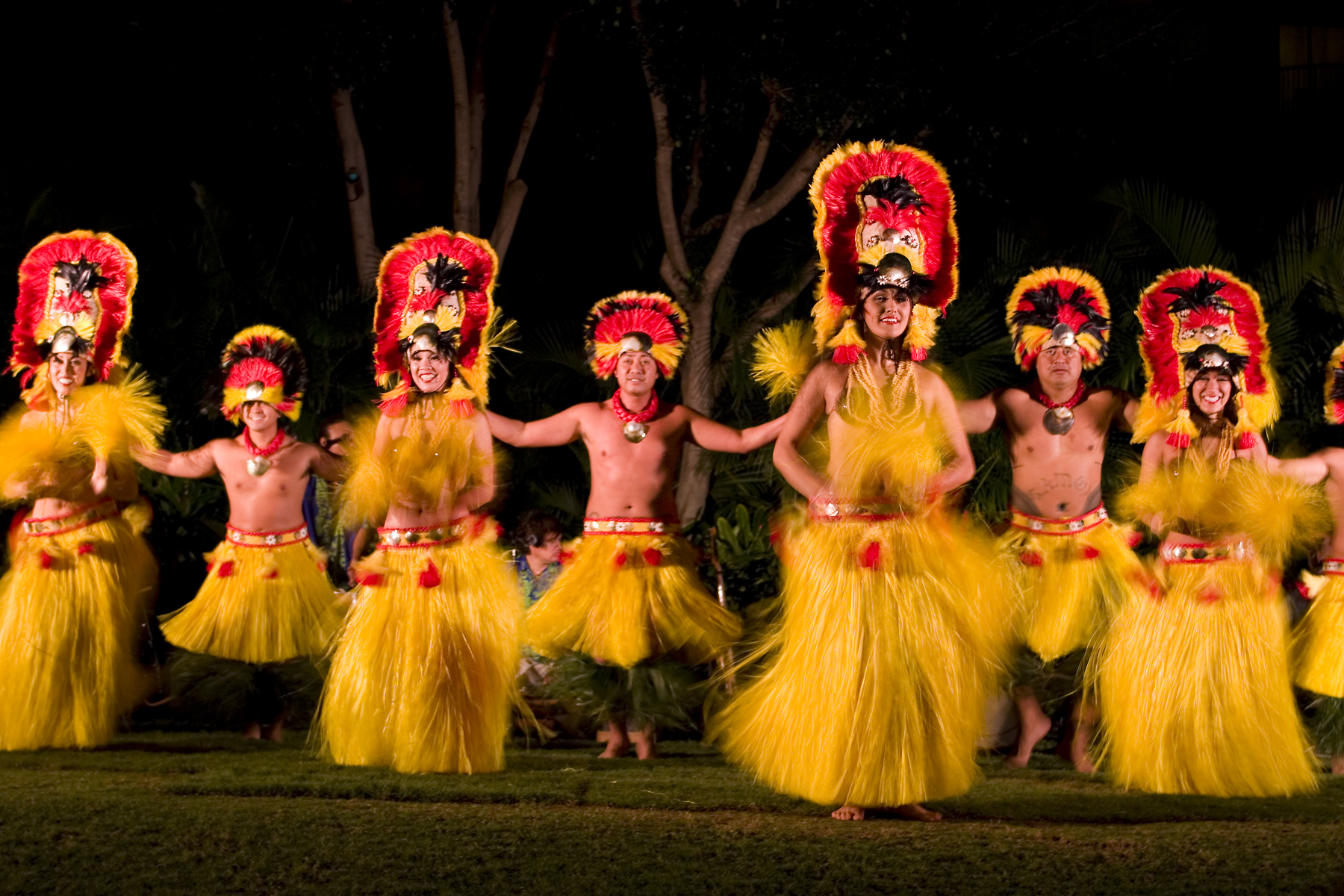
Luaus today are not as large as those hosted by Hawaiian royalty in 1800, but they are a lot of fun and had the same traditional foods ... and utensils are allowed.
Subscribe to:
Posts (Atom)